Waulk Mill was one of the last buildings to be built as part of Murray's Mills. A complex of structures built between Jersey Street and Redhill Street by Adam and George Murray. Work on their first mill began in 1797. Waulk Mill was built in 1842 making it 180 years old. It was Grade II* Listed in 1988 and is located within the wider Ancoats Conservation Area.
Waulk Mill is also known as Doubling Mill — the higher part of the building facing Redhill Street — and Fireproof Mill — the lower wing running along Bengal Street. Doubling Mill was powered by a steam engine. Doubling is a process of combining two or more lengths of yarn into a single thread. Fireproof Mill was a warehouse and the first in the complex designed to resist fire.
The cotton industry went into decline and by the 1940's Waulk Mill was occupied by a bedding manufacturer. In the early 2000's Urban Splash restored and renovated Waulk Mill into offices. The finished project won an RIBA award for its sensitive modernisation whilst retaining its historic heritage.
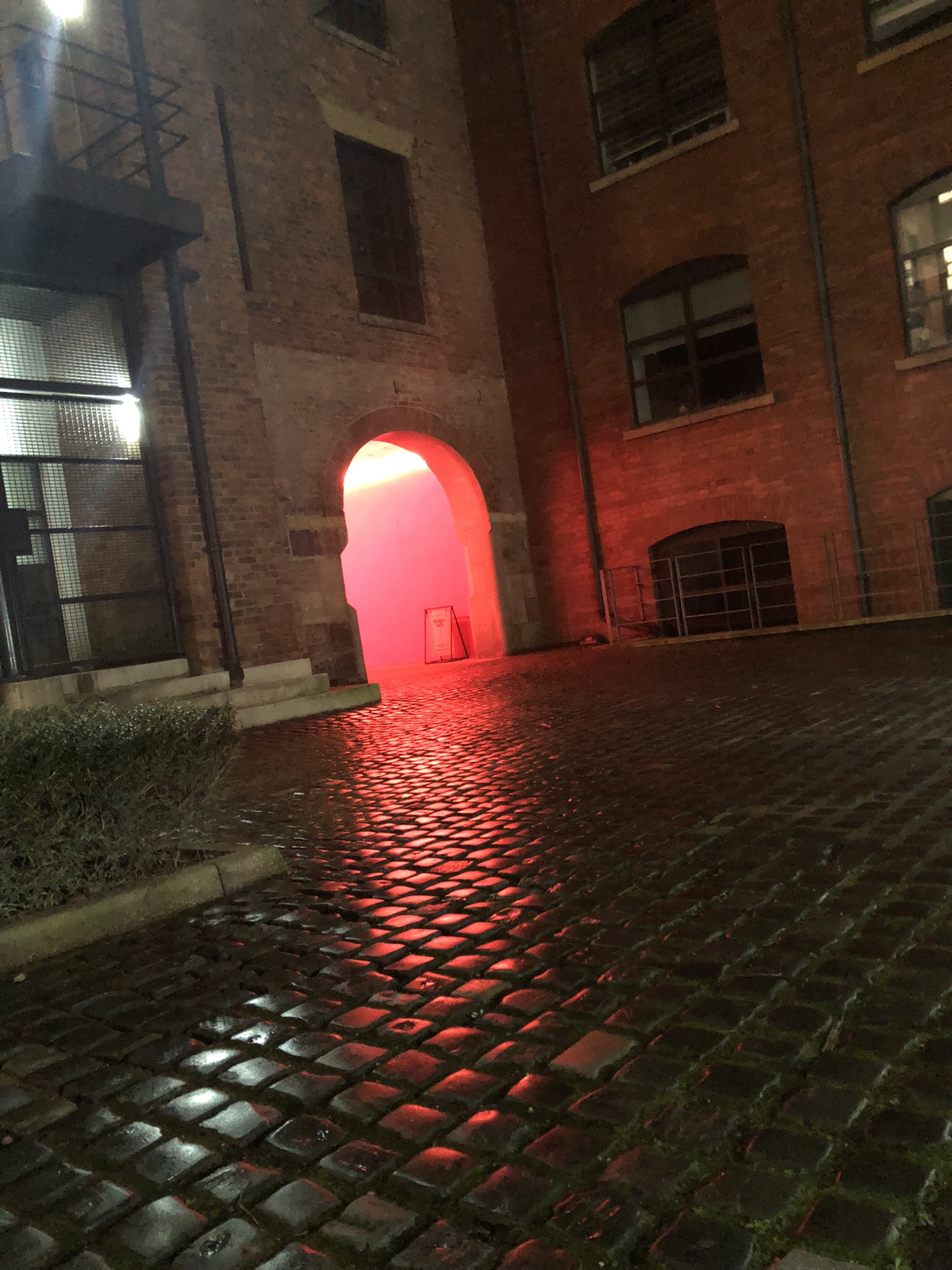
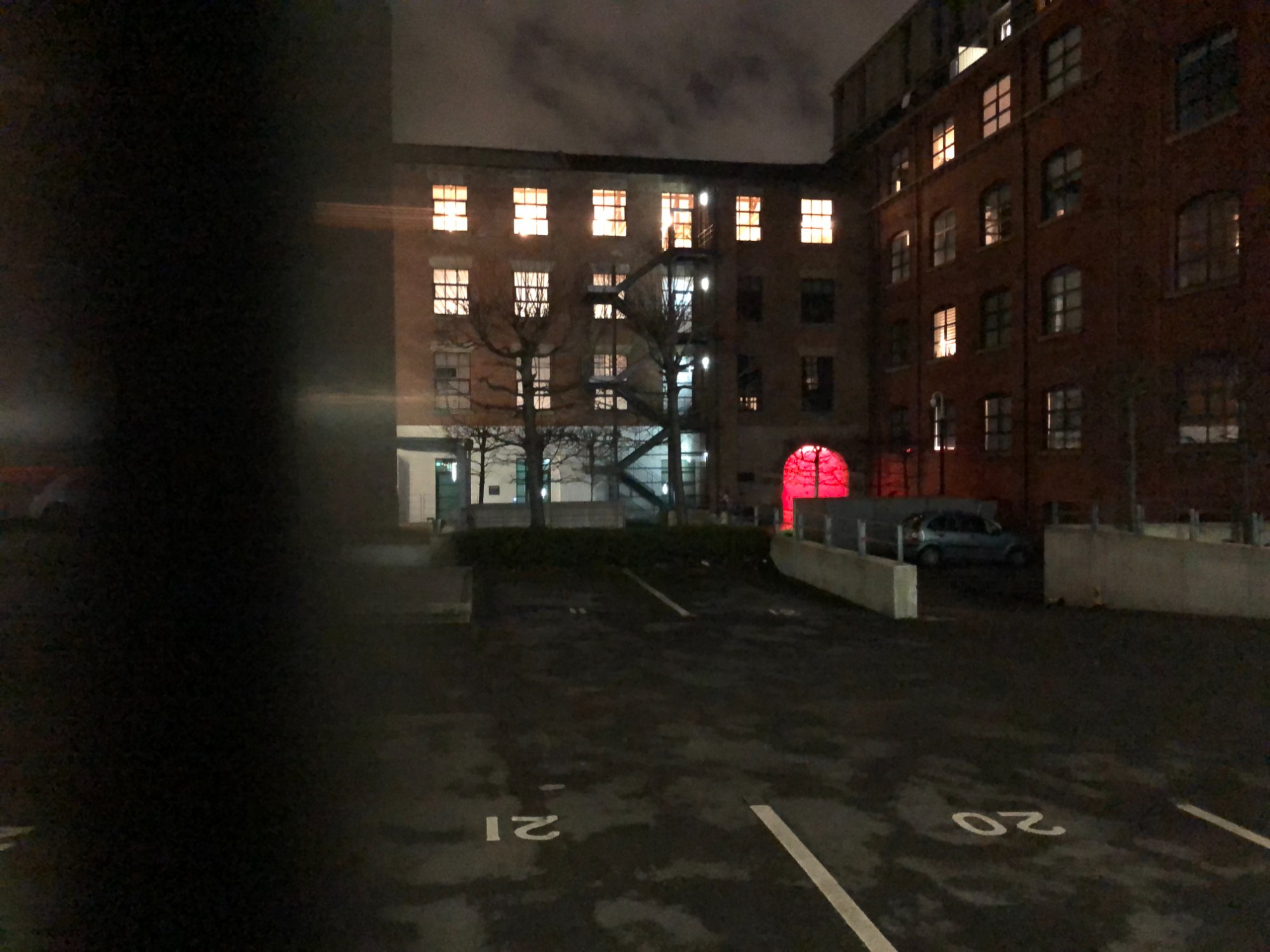
Now in 2022 the award-winning renovation still stands up technically as a robust intervention into a historic structure. The architectural principles adopted are sound. The building was designed so that the journey from the front entrance to your office is a minimalist, clinical experience devoid of extraneous function. A machine of efficient movement. With dramatic spaces — the five storey vertical void, walls of translucent glass and an open sided lift. All designed to create spatial excitement.
When the original renovation was designed the prevailing idea was to create order and repetition. Everything had to be simple, straightforward and aligned. Toilets are identical to each other. They repeat at each level of the building. The kitchens are all the same. The landings around the five-storey void are self similar. Every door is identically designed. There is no hierarchy between a toilet door and the entrance door to your office. All are designed not to stand out — to be uniform. To be purely functional devoid of a distinguishing personality.
There's a lot of white plaster. A neutral background to unite disparate spaces and homogenise the building into a single object. Any colour provided comes from a small palette. Timber on the landing floors and the tinge of turquoise in the walls of translucent glass. All this is flattened by a washed out lighting scheme devoid of any contrast. If this was a house it would be like putting the big light on.
In 2022 our aspirations have shifted. We are moving away from purely visual and spatial presentations. We want to be part of a community. We no longer desire isolation within our private offices. Technology has freed us from having to stay in one place. We want to venture out into the wider building, see other people, interact or sit and work. We expect our office buildings to expand and serve a community of diverse people. Think of a house with rooms. Some are private, usually the bedrooms. Can an office building be a house with private offices instead of bedrooms?
It is acknowledged that the base renovation is fundamentally robust. And ideas have changed. A new contemporary layer is proposed. An interface layer that connects the base scheme to our current aspirations. A layer that provides missing functions. Places to commune or work outside of the private office. A layer that deconstructs the order, alignment and repetition of the base renovation. A layer of variation, colour and life.
When entering the building one's attention is drawn into the space towards the translucent glass wall and lift. It's easy to miss the drama of the vertical five storey void. And miss taking in the entirety of the building before getting lost in the small spaces. The intention here is to bring out the bold move already made within the original scheme. A light sculpture will draw your eye upwards. You will take in the wholeness of the building in one go — this will alert your sense of the full volume and you will take that expansion with you into the smaller circulation areas.
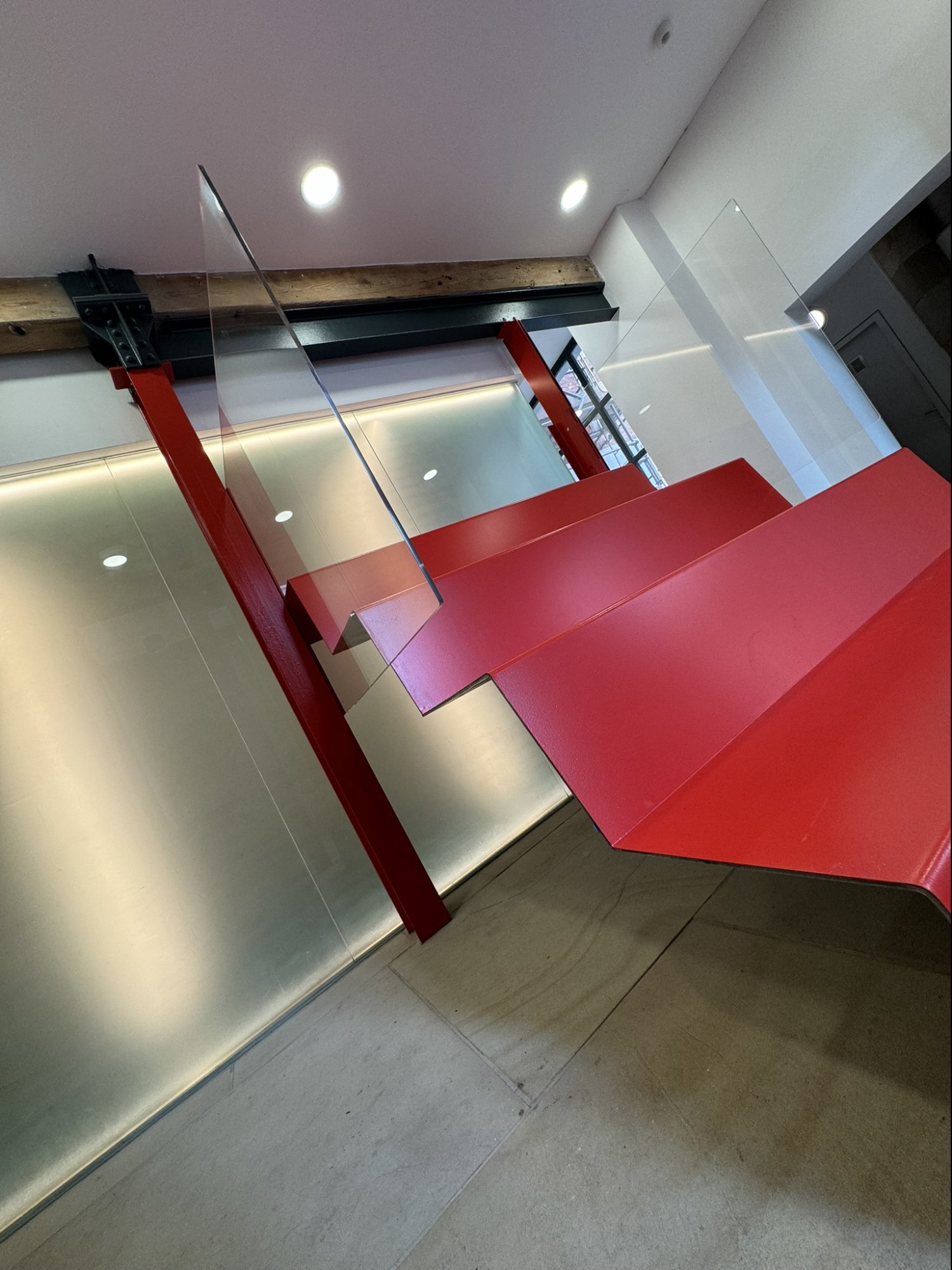
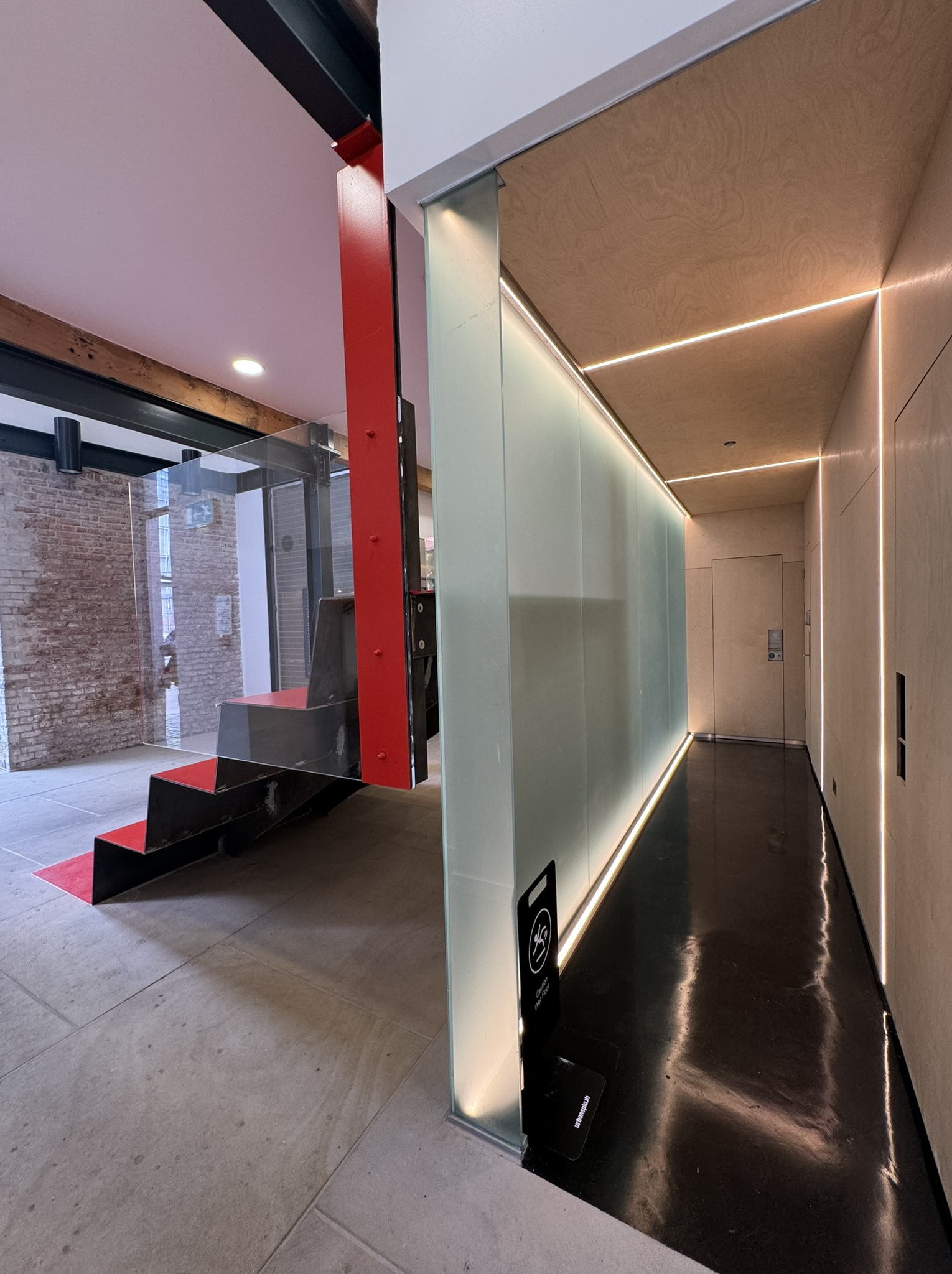
The new flooring is large slabs of York stone. An allusion to the historic mill floor. Light is absorbed into the texture of the stone emphasising the brightness of the lift shaft and the glowing glass screen. The existing translucent glass wall is illuminated from behind to provide contrast and glow. Behind the glass projection screen is a raked seating area formed out of red steel plate. People can sit and work here or give a presentation using the video projection. The seating acts as a platform to facilitate people leaving their private spaces and interacting with other businesses in the building.
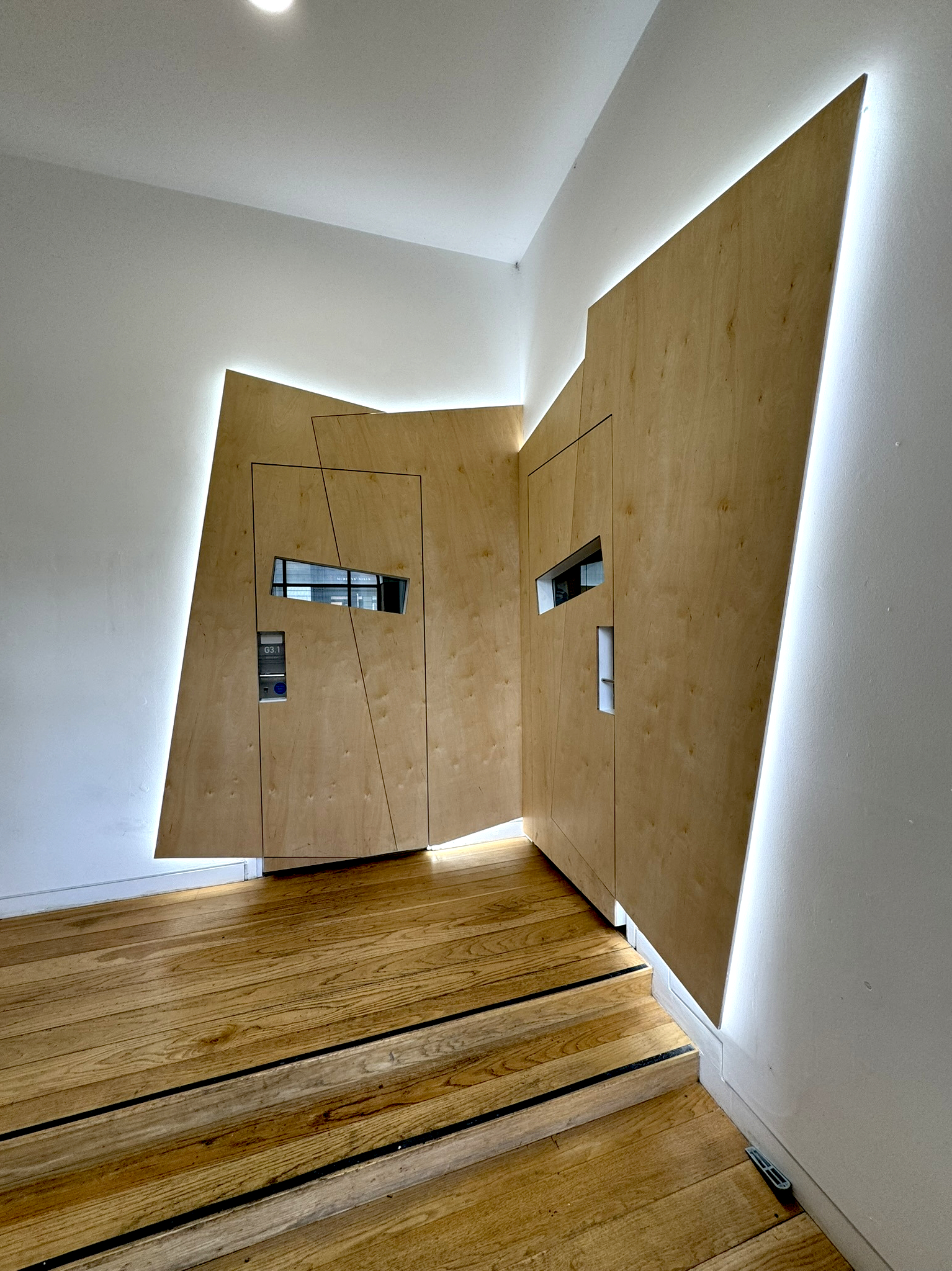
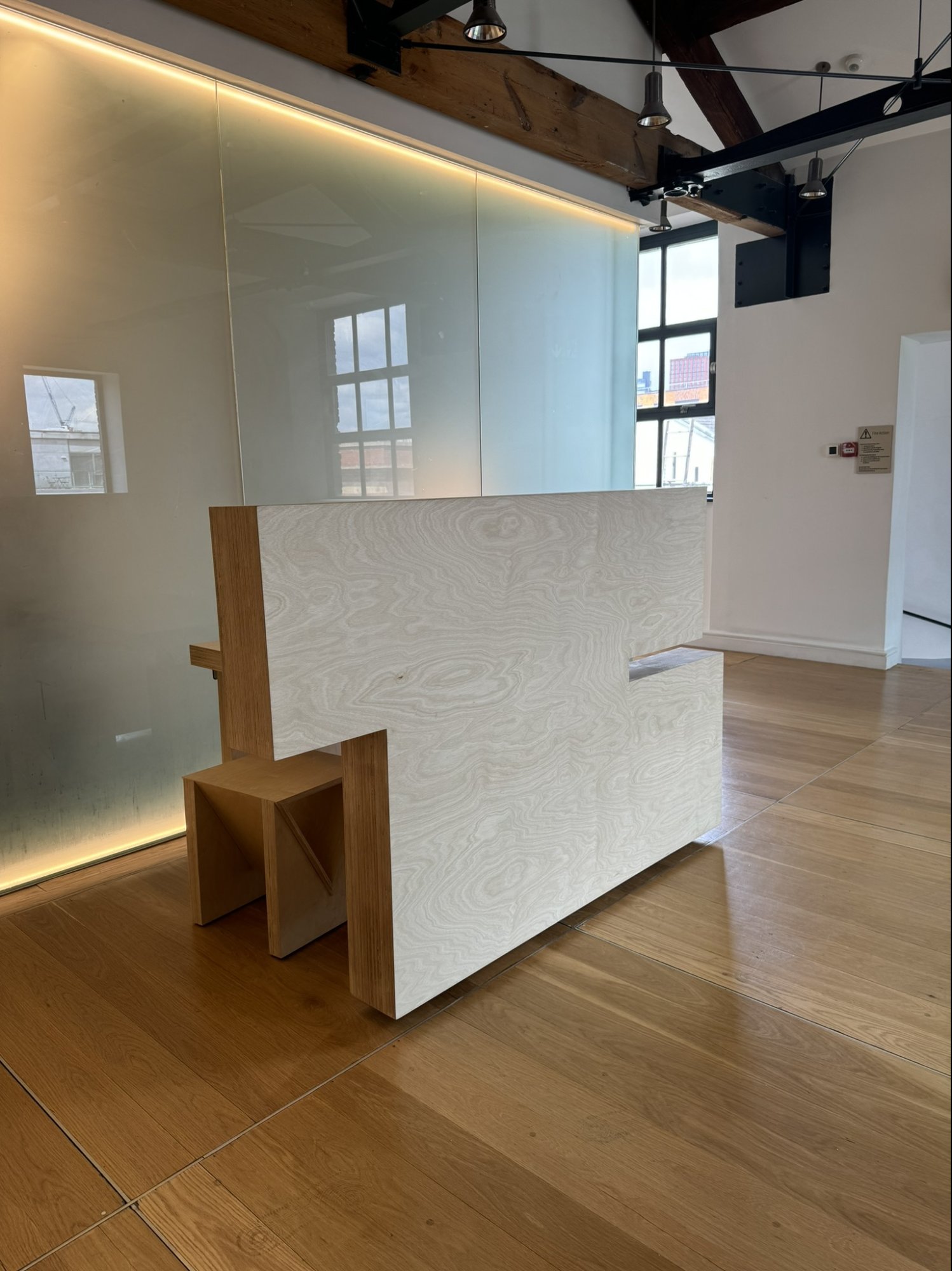
The landings are the nicest spaces in the communal part of the building. However, they were only used for transition. Bespokely designed timber furniture has been inserted for people to sit or perch. Think of it as punctuation, stopping you from sliding right through the space without a pause. The flat downlighting has been removed and the existing translucent glass wall is lit from behind so it glows.
The landings also act as entrances to the studios. The existing doors were designed to blend into the walls and were identical to all the other doors in the building. We now prefer difference. The studio doors have become sculptural timber plates with integrated lighting. The idea here is to celebrate the entrance to your office making it a working, functional piece of art.
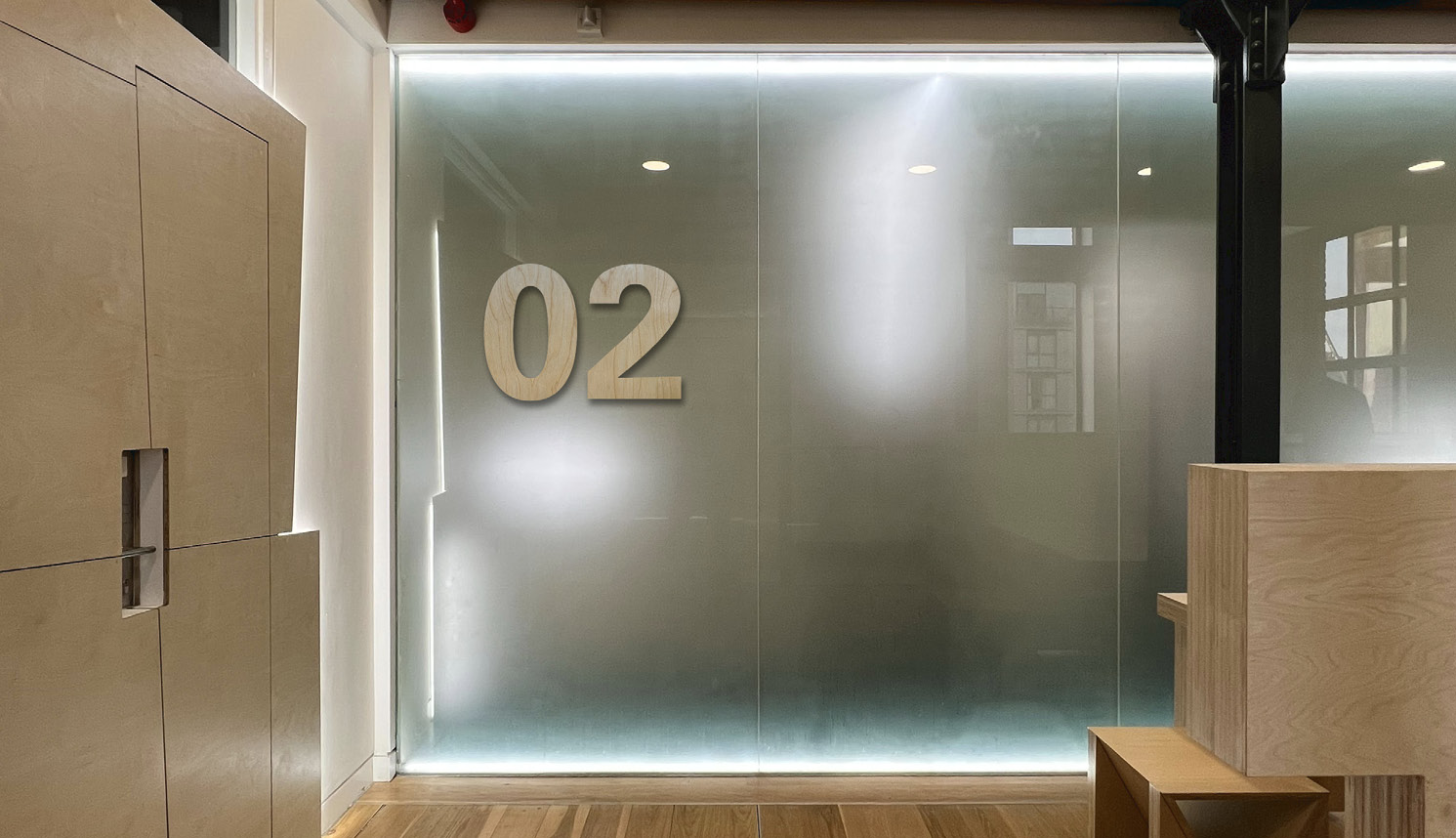
Landing — birch ply doors, bespoke furniture and illuminated glass with timber floor numbers
The toilet lobbies are lined in a natural warm material — birch faced ply with lighting strips recessed into the surface. The ply wall has the ply doors built in flush. The translucent glass wall is lit so it glows. Each toilet has a different design using the birch faced ply and the recessed lighting strips. It's a space we go to every day — temporal repetition. On top of this every toilet was identically designed and they repeat at each level. The intervention deconstructs that uniformity.
Photography: Maurice Shapero