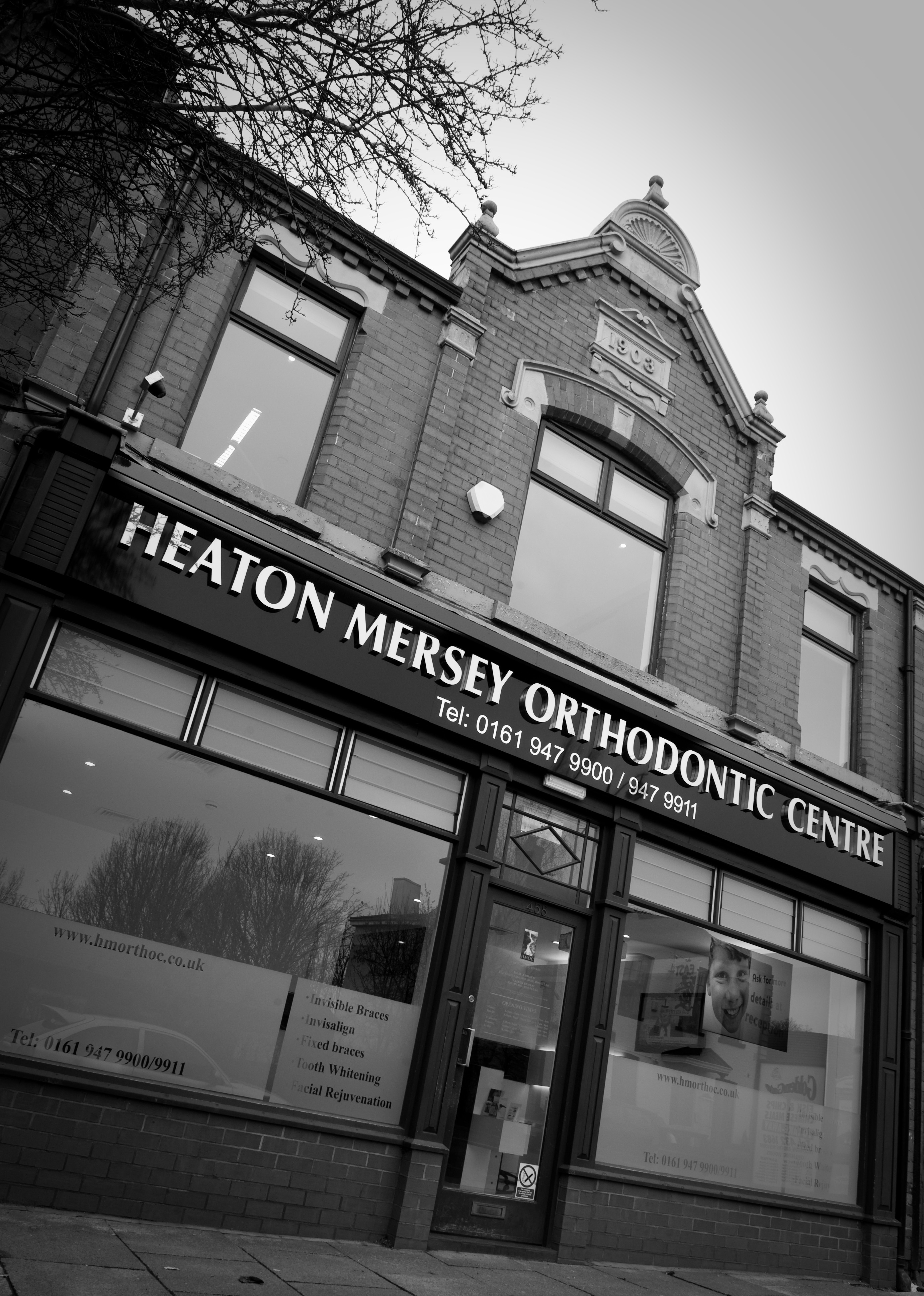
A modern extension and refurbishment of an established orthodontic centre in Heaton Mersey Conservation Area. The original building is a Victorian corner property, dated 1903. The extension rises behind and above it — angular white volumes with sharp geometric cuts that bring daylight deep into the surgeries below.
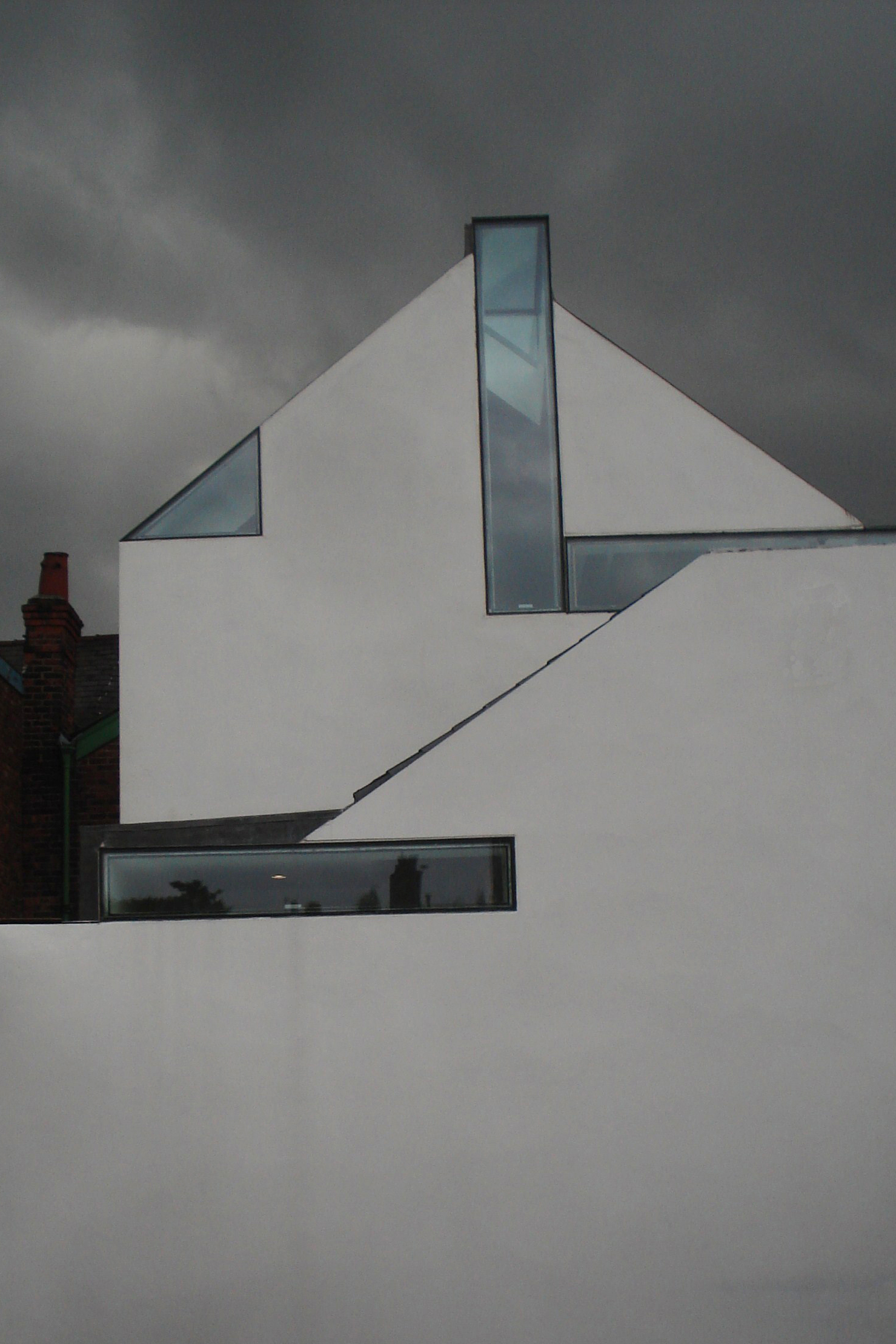
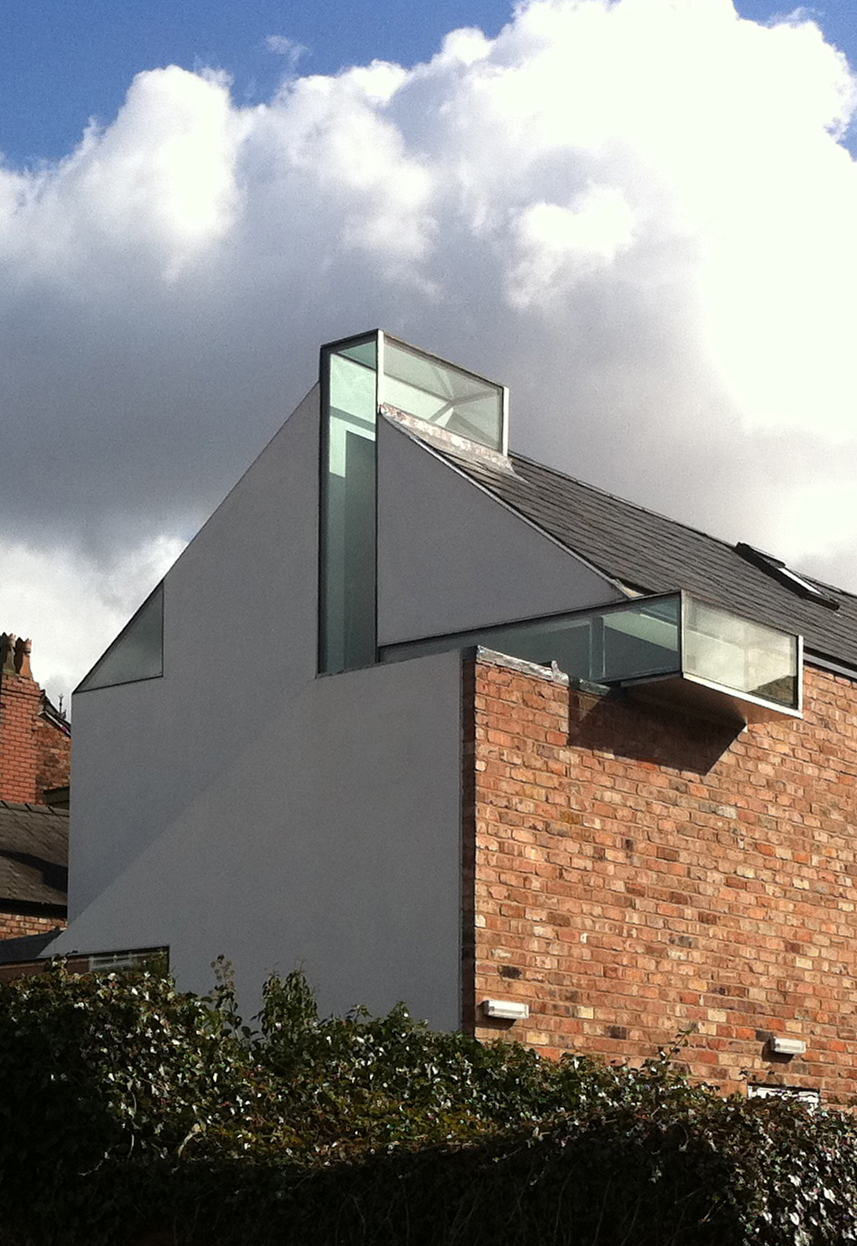
The roofscape is the building's most distinctive feature from outside. Folded white planes and frameless glass slots create a silhouette that shifts as you move around it — part building, part abstract sculpture, reading differently against the sky from every angle.
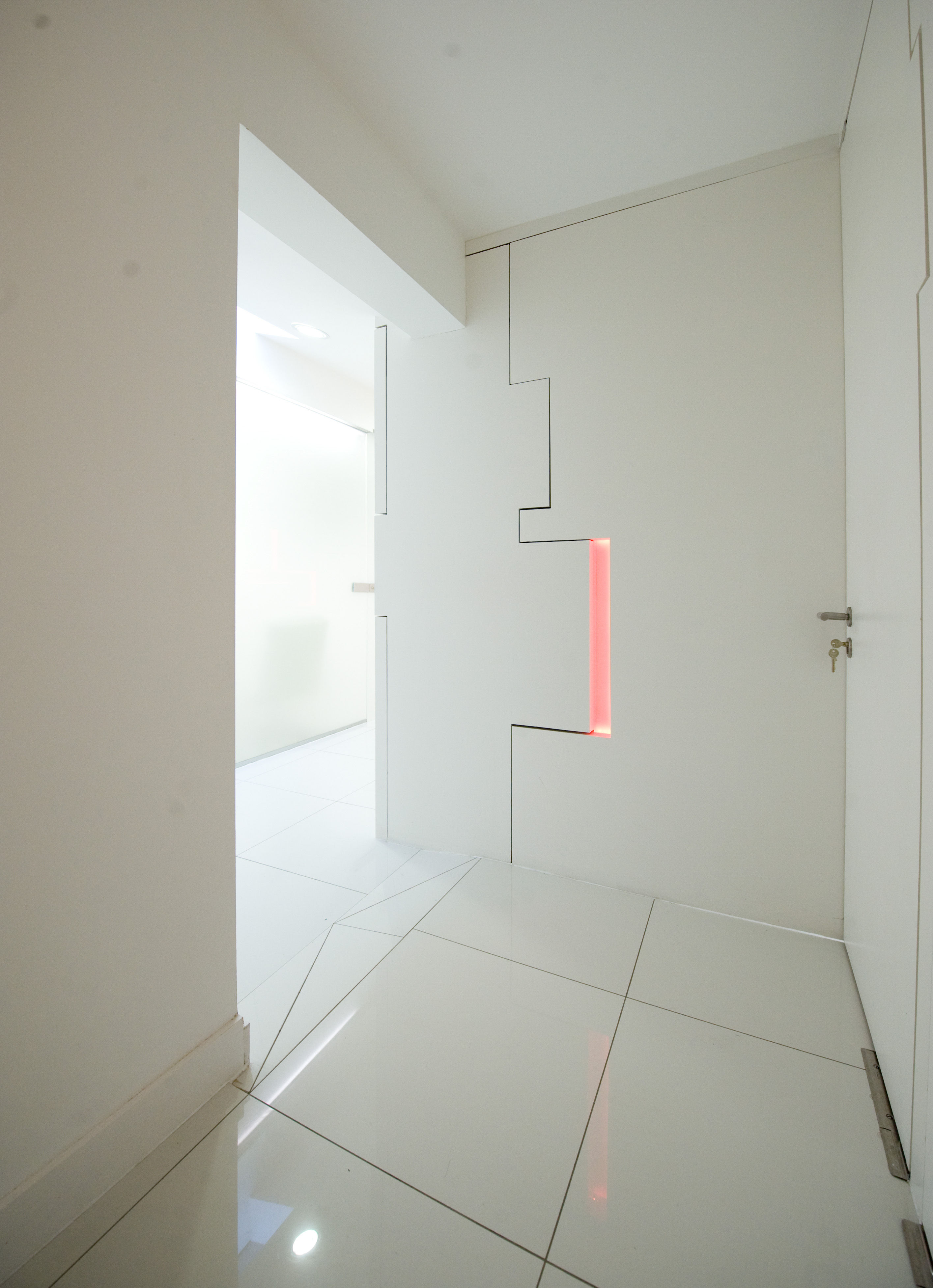
Inside, every surface is white. The walls, the floors, the ceilings — all treated as a continuous envelope. Into this whiteness, every door is a different interlocking shape that fits into a fixed panel, creating a kind of ribbon that runs through the building. The doors don't read as doors. They read as cut lines in the wall — stepped, angular edges that only reveal themselves as openings when they move.
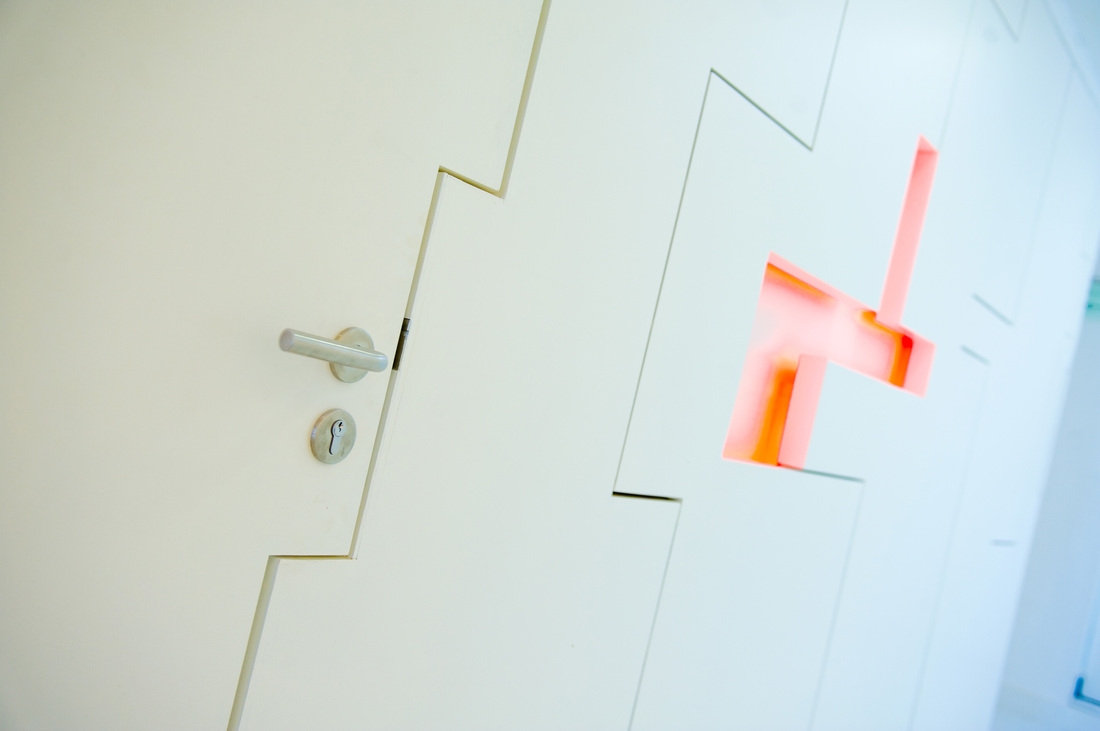
Set into the wall panels at key points are illuminated cross-shaped openings — recessed slots backed with coloured light that glows pink and red into the white corridors. They function as wayfinding — each cross is different, marking a surgery or a threshold — but they also give the interior its character. In a building type that is typically clinical and anxious, the crosses introduce something unexpected. Colour. Warmth. A sense that someone has thought about what it feels like to be here.
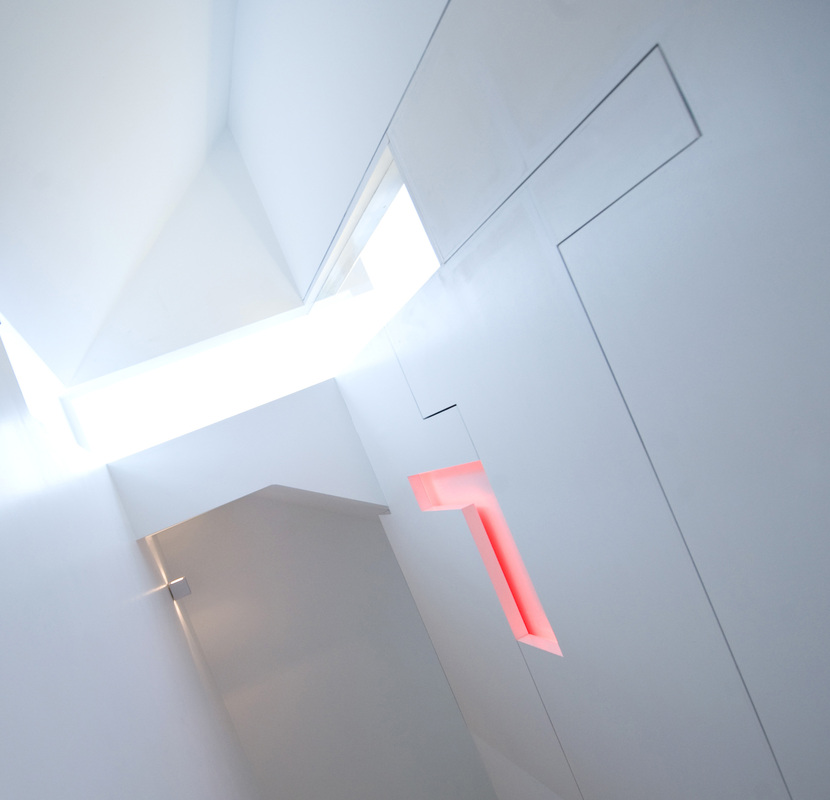
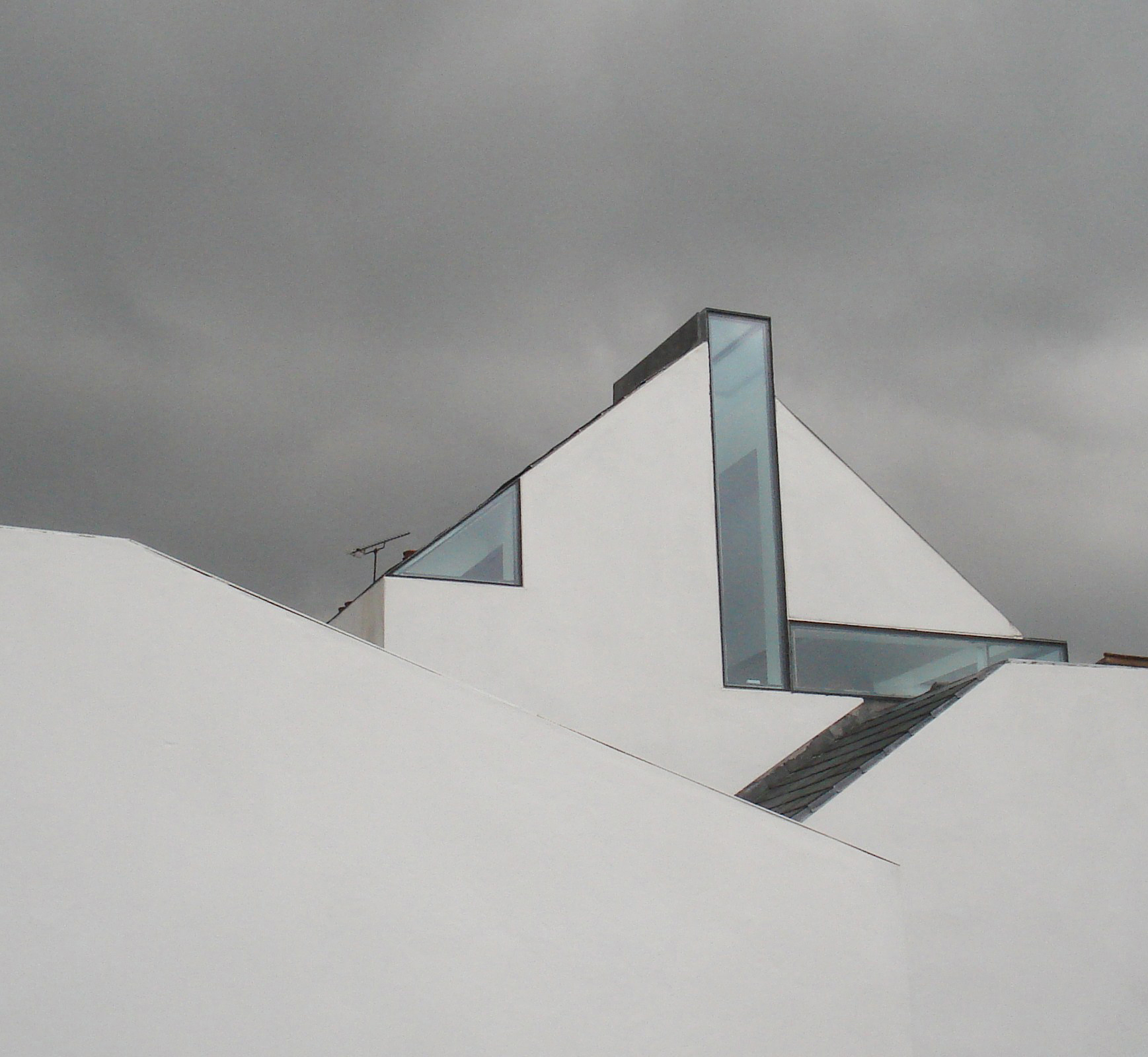
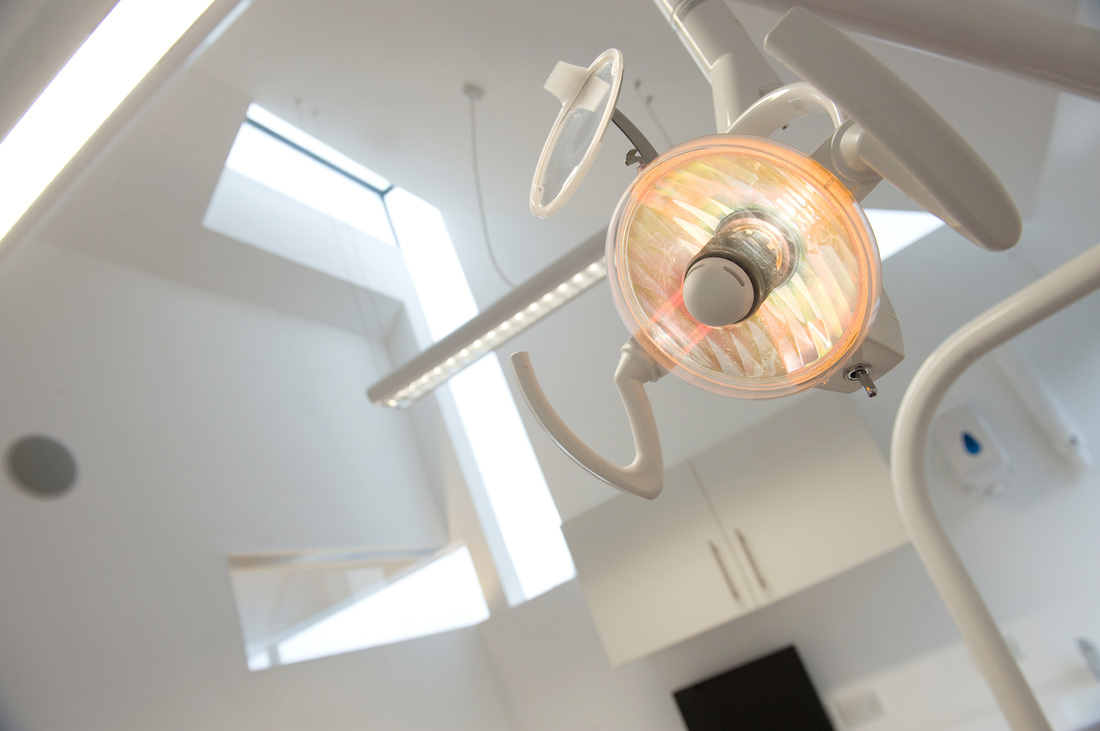
The rooflights are cut as angular slots — triangular and trapezoidal openings that throw sharp blades of daylight across the white interior. In the surgeries, natural light falls directly onto the treatment area. Patients look up and see sky rather than a suspended ceiling. It's a small thing, but it changes the experience entirely.
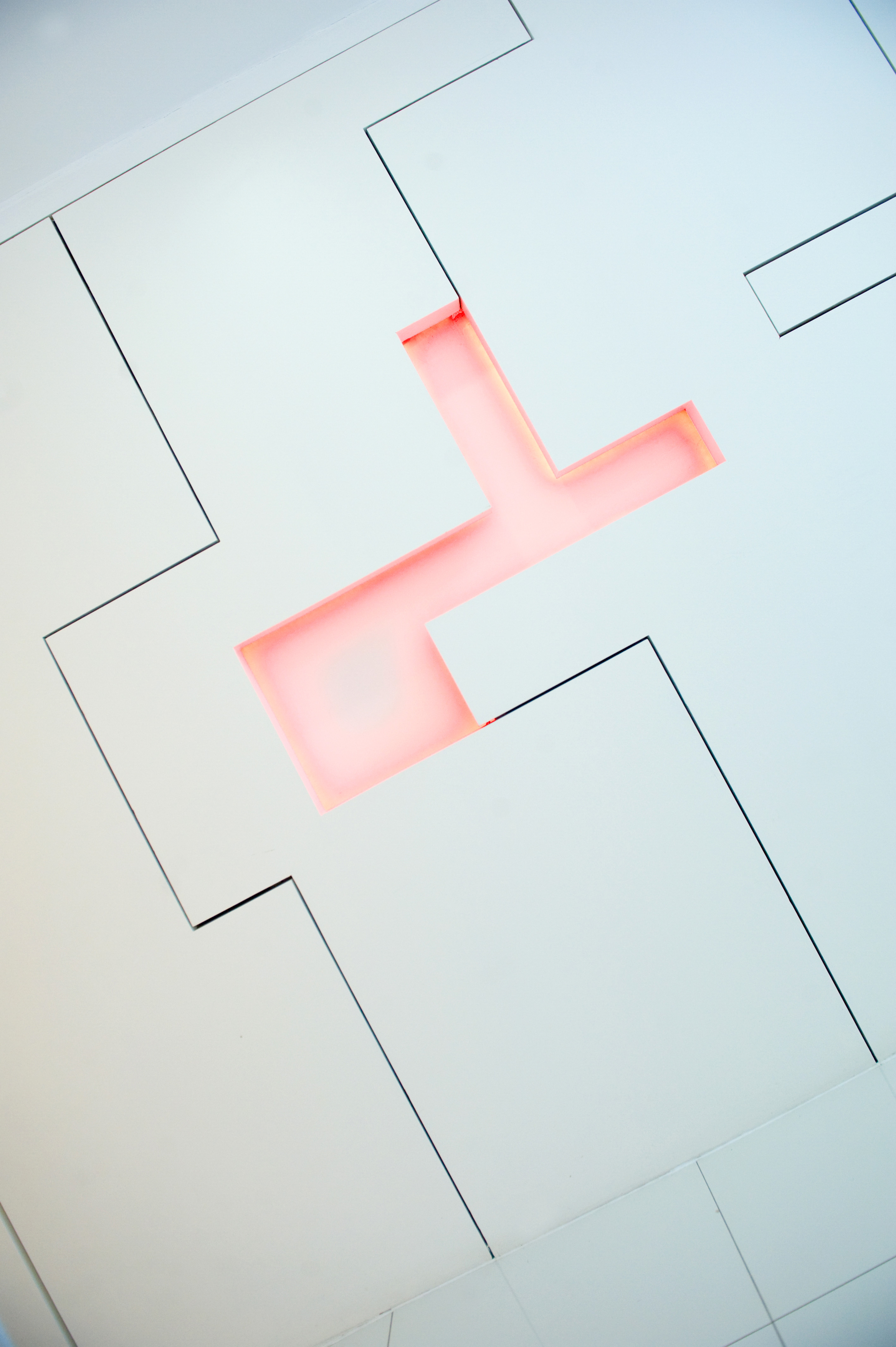
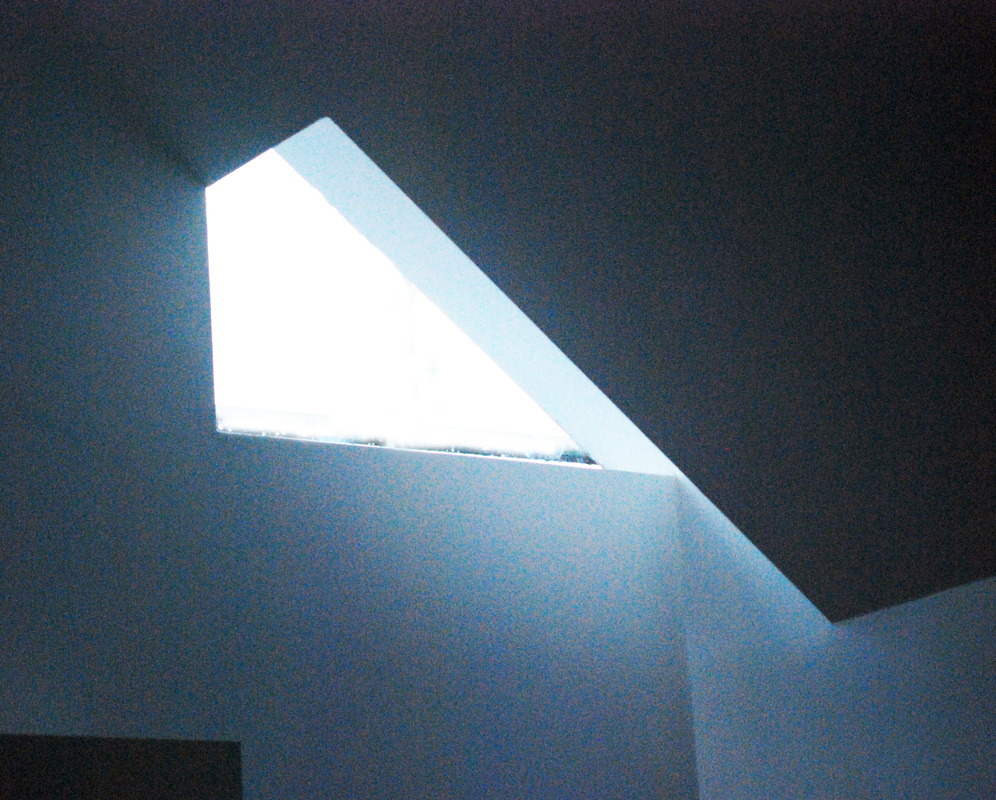
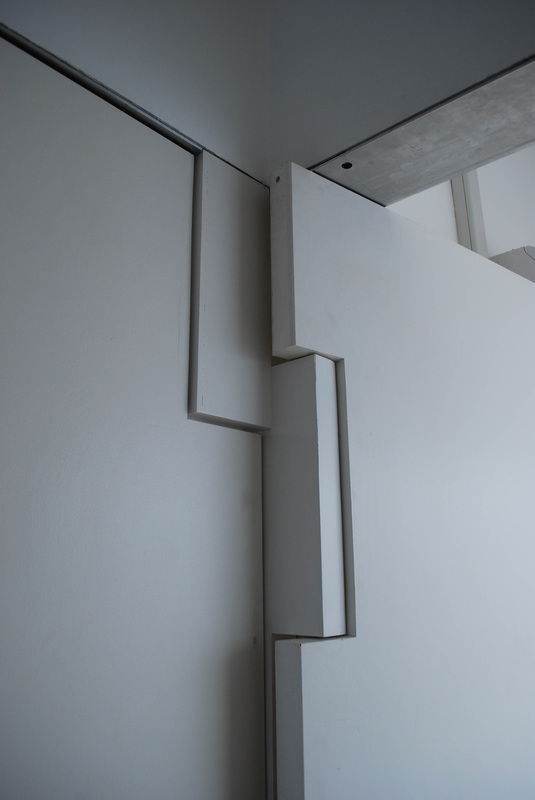
The wall junctions are resolved with the same precision as the door edges — stepped, interlocking profiles where panels meet, creating shadow lines that reinforce the sense of the interior as a single folded surface. Nothing is applied. The architecture is in the cuts and the joints.
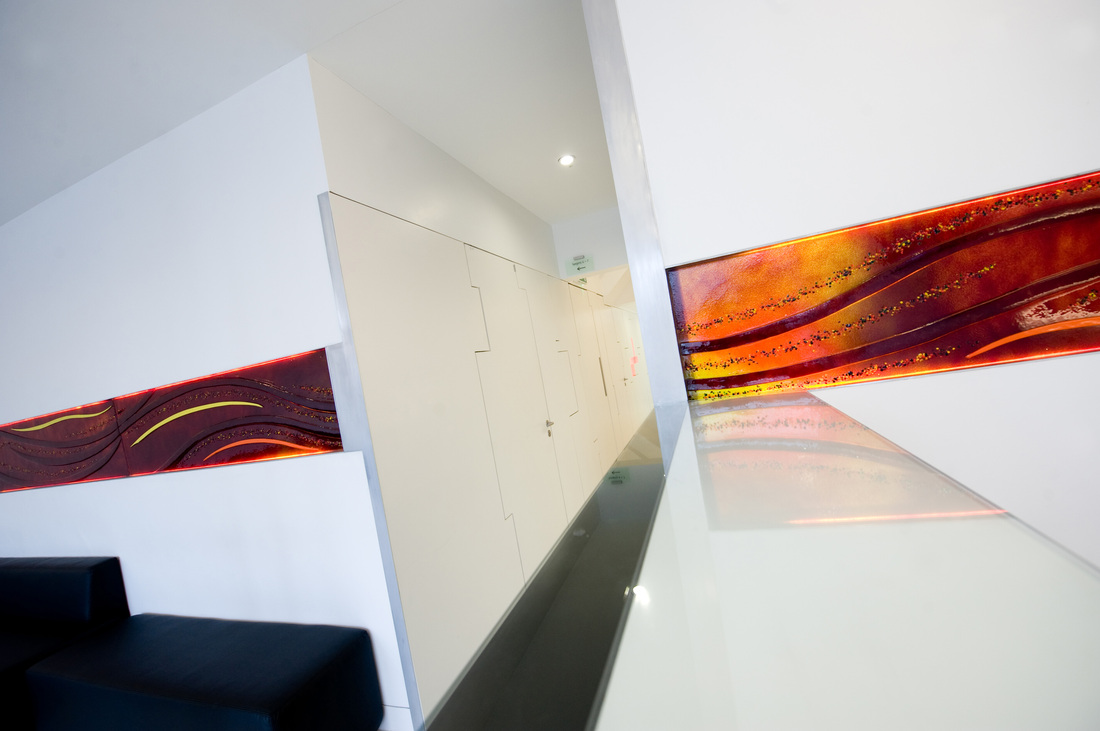
In the waiting area, commissioned fused glass art panels run in horizontal bands across the partition walls — red, amber and gold against the white. They catch and refract the light from the rooflights above, introducing a warmth and craft that sits in deliberate contrast to the precision of the architecture.
The building is invisible from the street — the Victorian shopfront remains exactly as it was. The intervention happens entirely behind and above, visible only as an unexpected roofline from the back lanes and neighbouring gardens. Conservation area, contemporary architecture. Both are served.
Photography: Maurice Shapero