Palmiro was my first project as Studio Maurice Shapero. An extension and refurbishment of a high-end Italian restaurant in Chorlton Conservation Area, south Manchester. The project was published in the Architects' Journal and exhibited at RIBA in London.
The existing building was a converted Edwardian house — domestic in scale, already extended informally over the years. The brief was to add a new kitchen, create a proper courtyard for outdoor dining, and give the restaurant an identity on the street that was unambiguous about what it was. Not a house any more. A restaurant.
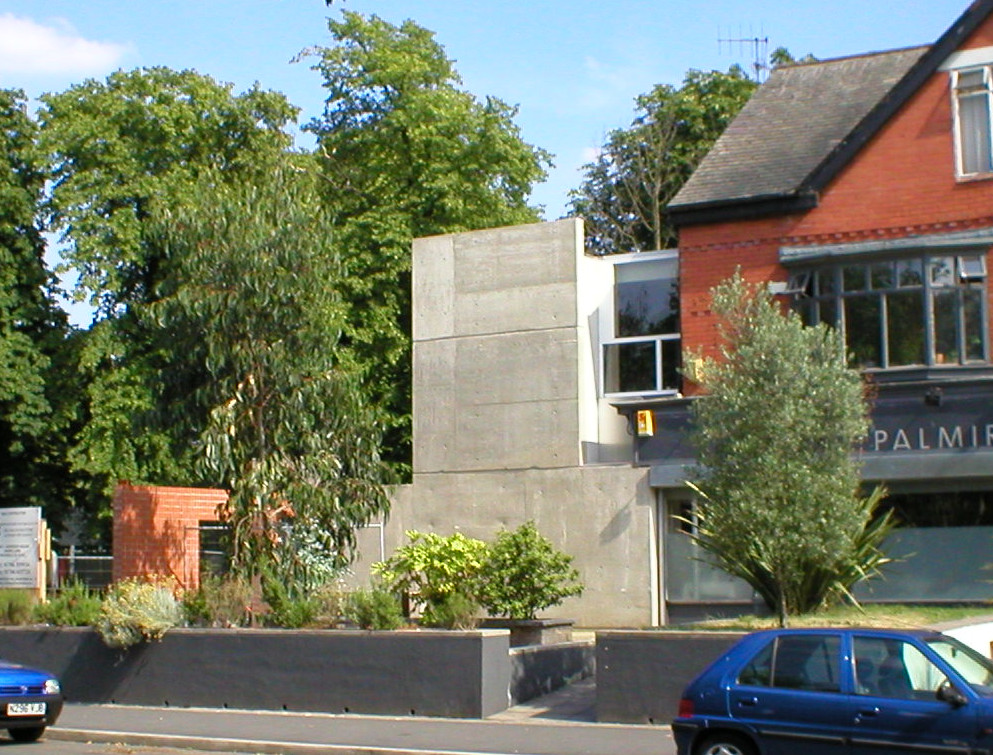
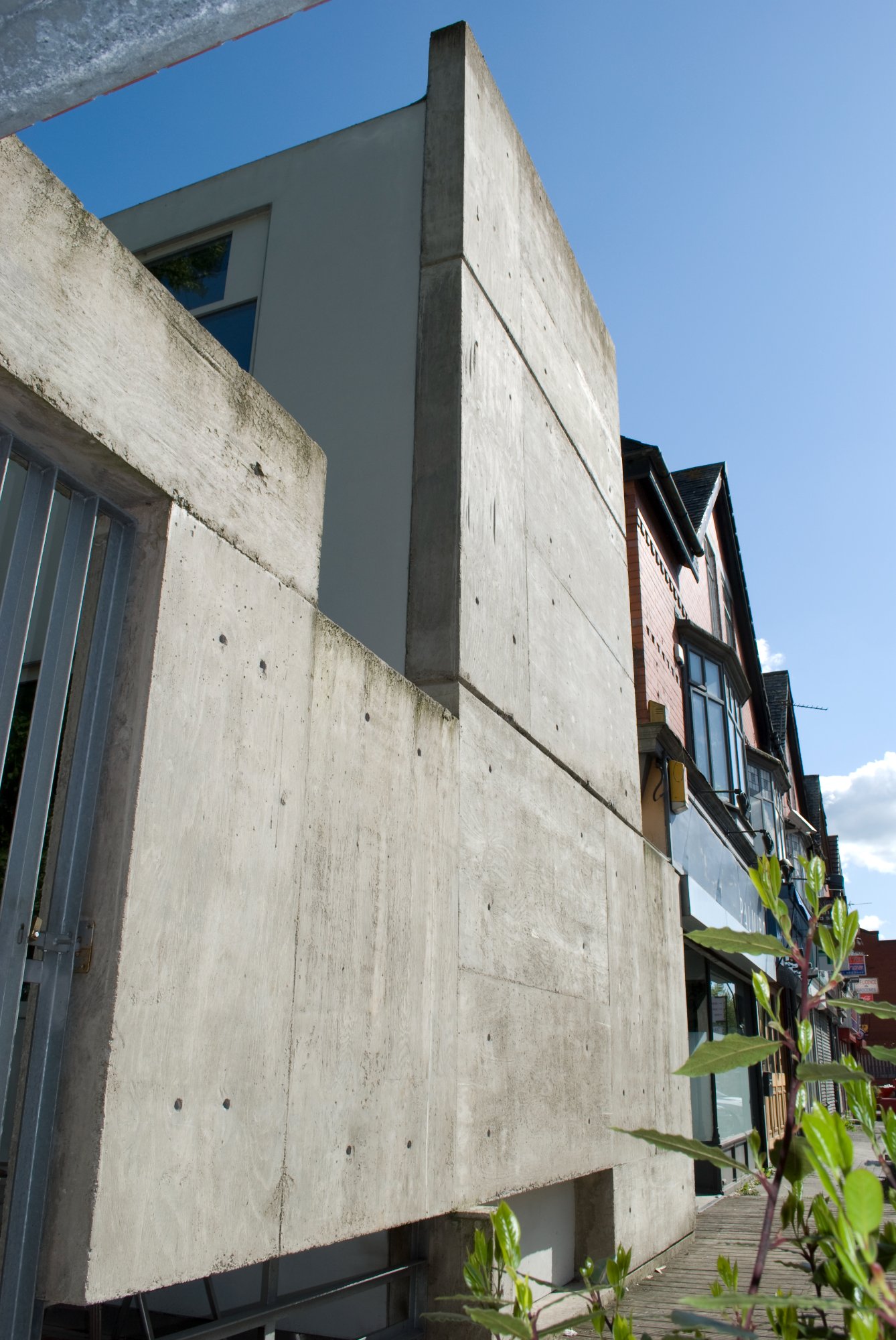
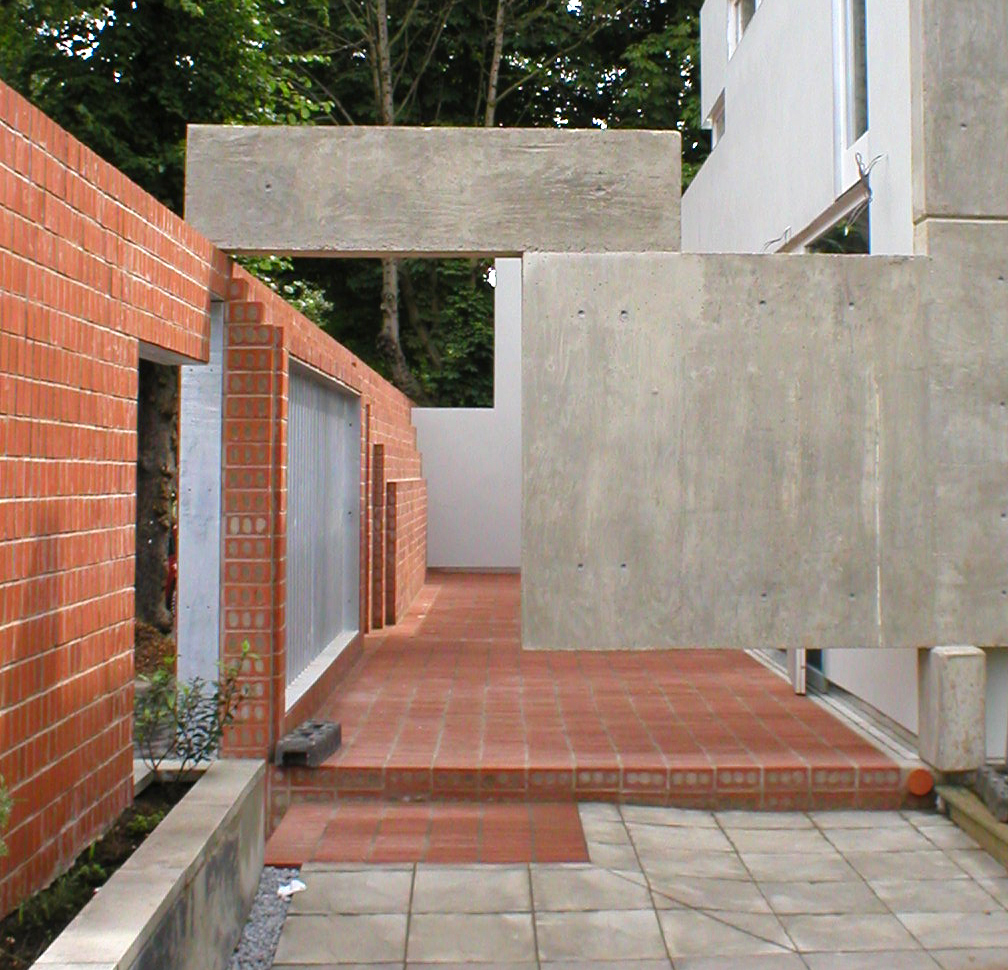
The extension is board-marked concrete, red brick and galvanised steel. Three materials, each doing something different. The concrete forms a tower — a vertical marker on the street that announces the building from a distance. It's cast in situ with the timber formwork left to imprint its grain on the surface. The brick picks up the local Chorlton vernacular but is laid in a precise, almost graphic pattern, with recessed panels and projecting courses that give the walls a texture and depth beyond their function.
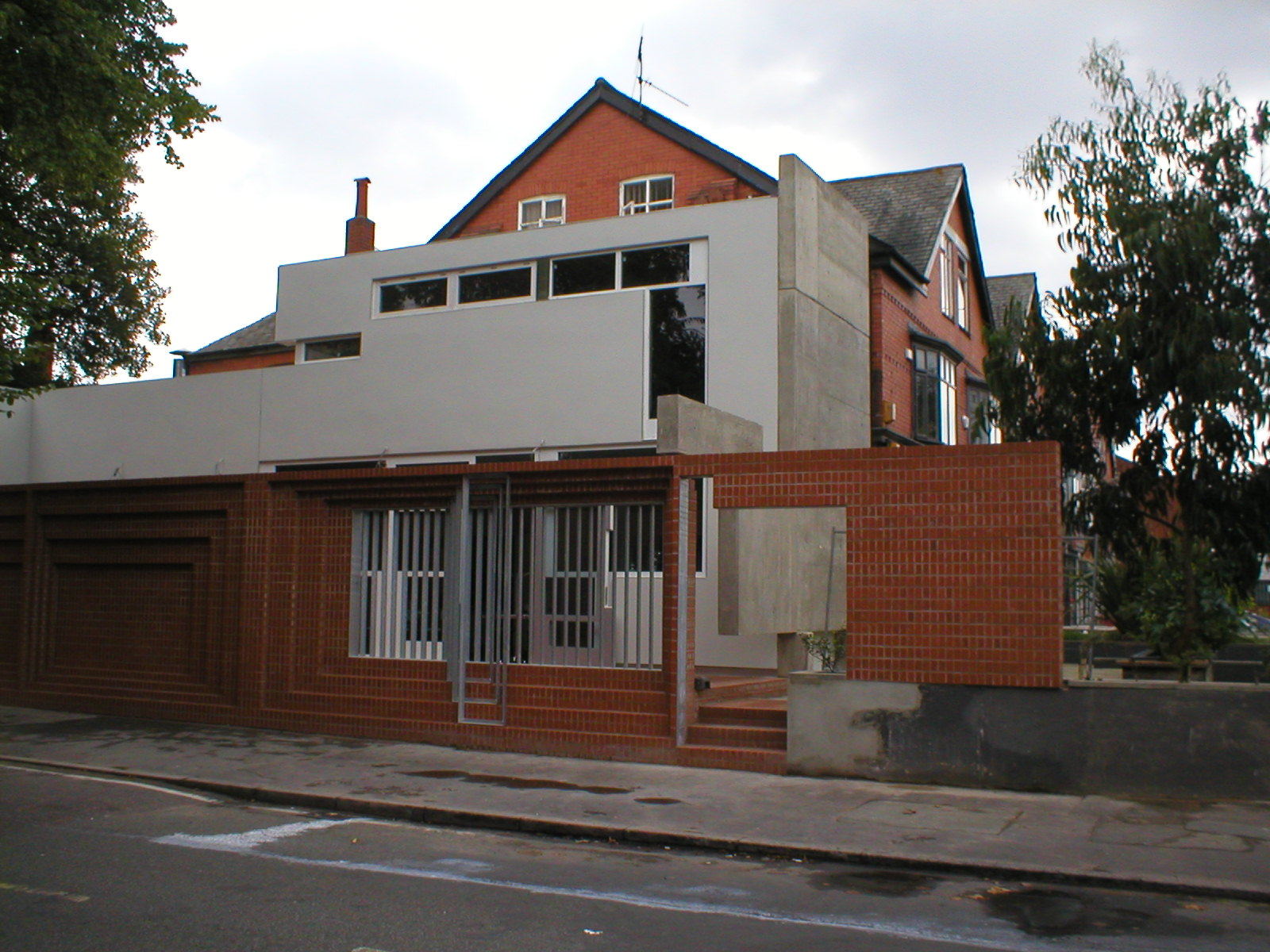
The galvanised steel screens fill the openings in the brick boundary wall. They're functional — security, ventilation, glimpsed views in and out — but they also catch the light, flashing silver against the warm red of the brick. The contrast between the handmade quality of the brickwork and the precision of the steel is deliberate. Each material is allowed to be itself.
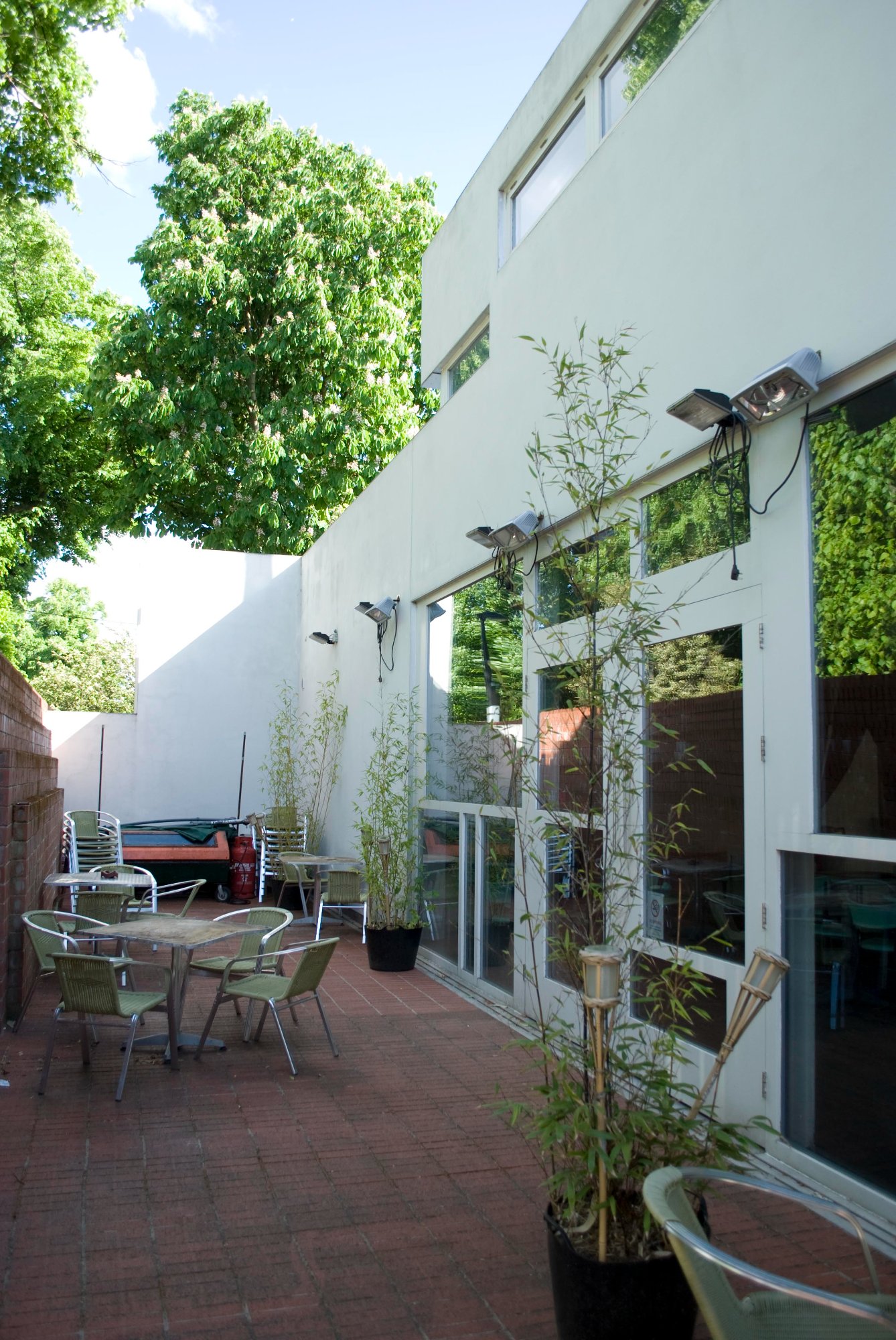
The courtyard is formed between the new brick walls and the back of the existing building. Quarry tile paving, white rendered walls, and a mature tree that was kept and built around. It's a sheltered outdoor room — a Mediterranean quality of eating outside within the enclosure of the building, appropriate for an Italian restaurant in an English suburb.
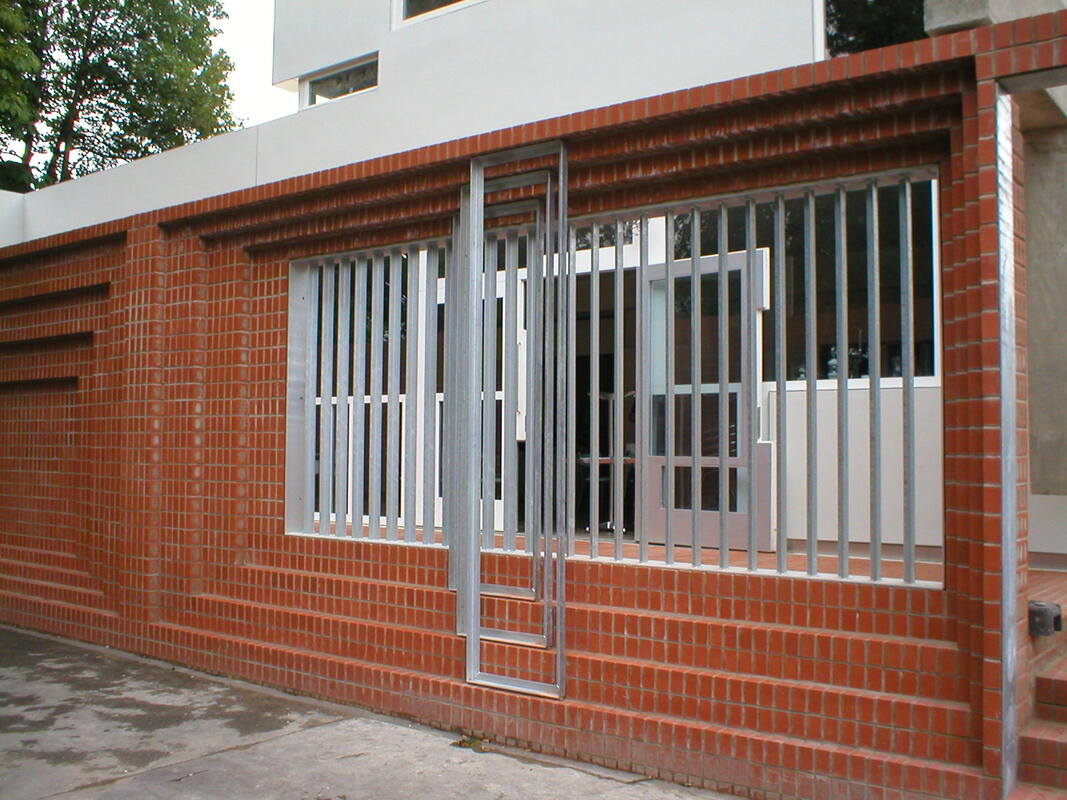
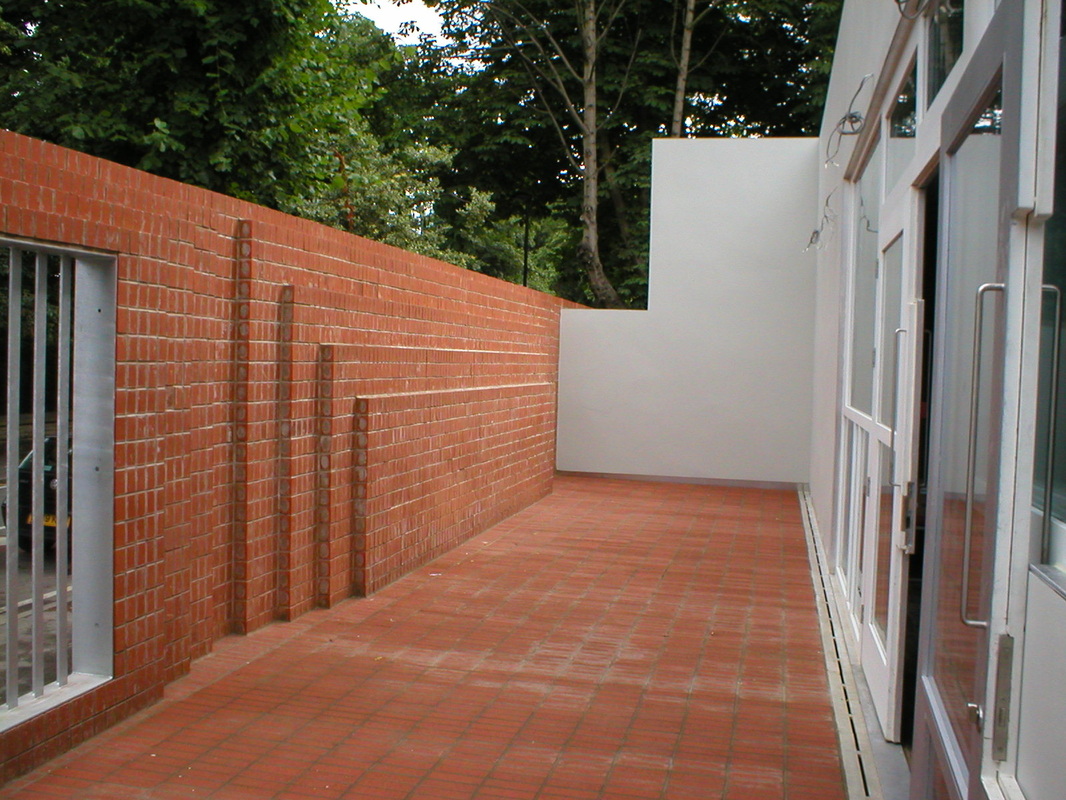
The concrete, brick and steel come together at the junctions with a directness that owes something to the New Brutalism — materials meeting honestly, structure legible, nothing concealed. It was a radical proposition for a restaurant on a suburban high street, and it remains one of the most uncompromising things I've built.
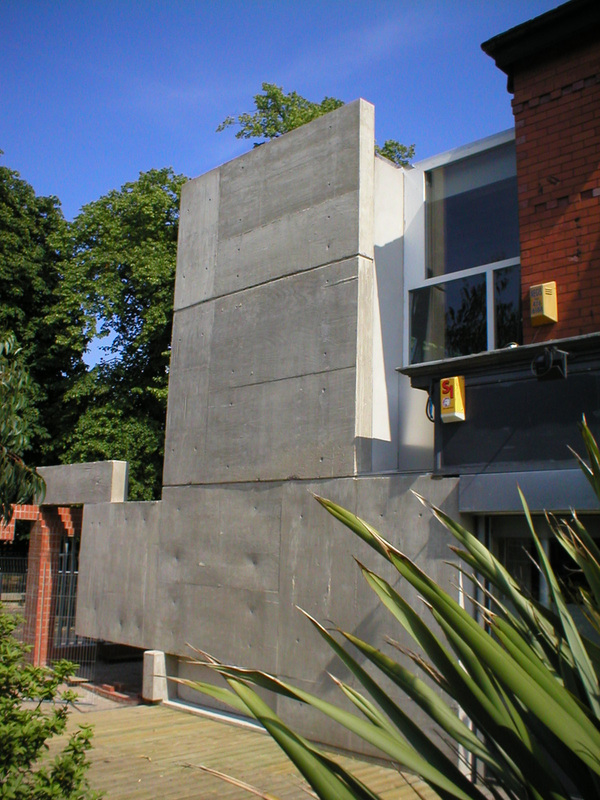
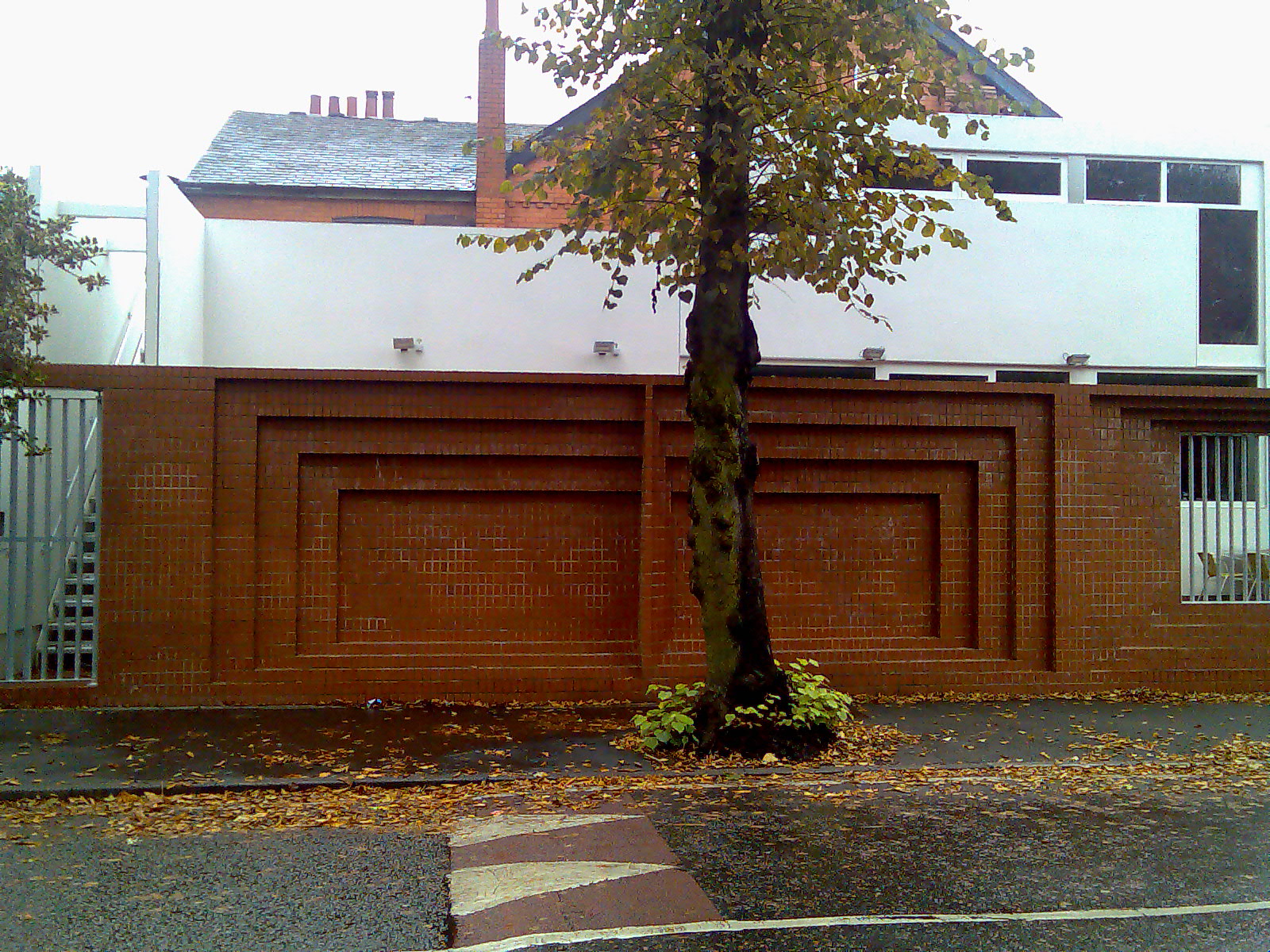
The rear elevation reads as an abstract composition of brick panels — recessed fields within the wall plane that give scale and rhythm to what would otherwise be a blank boundary. It's brickwork treated almost as furniture, each course considered, each recess deliberate.
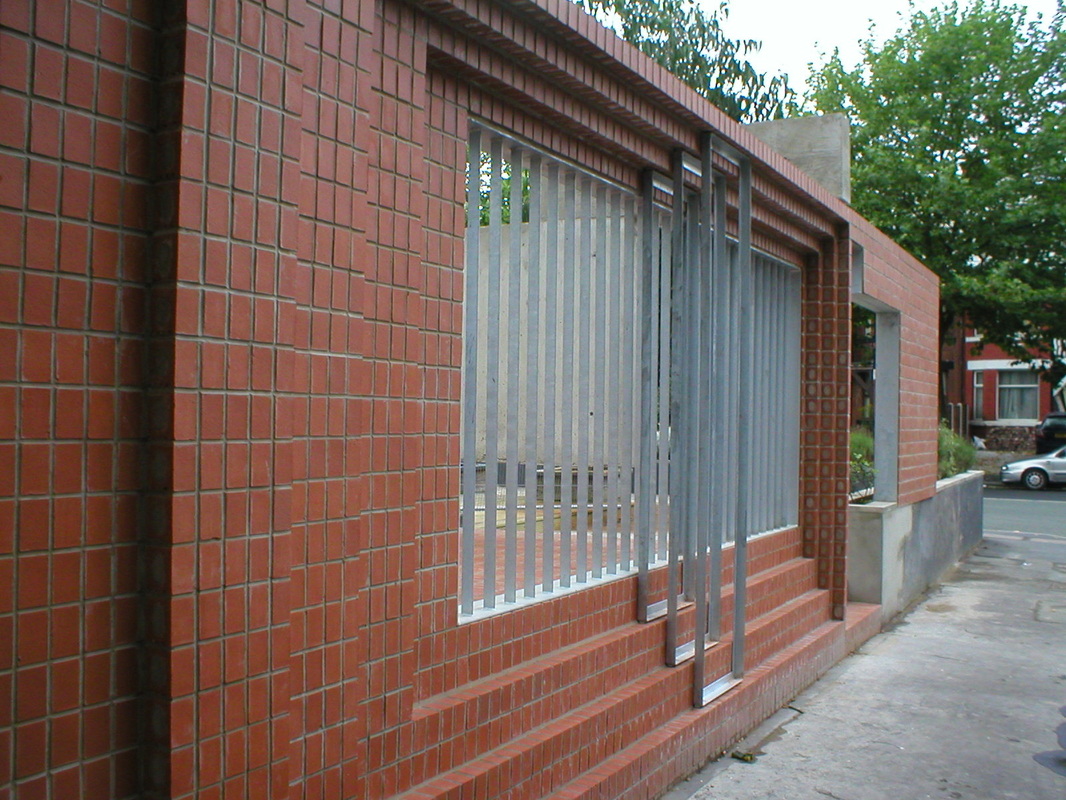
From the back lane the composition is at its most reduced. The long horizontal brick wall — panelled, weighty, rooted to the ground — and a single tree rising vertically against it. The two things work together. The wall is all about the horizontal: coursework, recessed fields, a steady rhythm that runs the length of the boundary. The tree interrupts it with a vertical that the wall can't provide on its own. It's an accidental partnership that makes the elevation.
Photography: Maurice Shapero